

Center Updates
Being Laid Off: A Texas Journalist’s Experience
By Kevin Vu
April 22, 2026
The Reckoning
It seems like once a month we’re seeing news about layoffs in the journalism industry. In January 2025, CNN had 200 layoffs. The Houston Landing shuttered a few months later in May, leaving everybody who was left to find somewhere new. Then, the Dallas Morning News laid off 26 employees in November, nearly two months after Hearst acquired the paper.
I didn’t think I would experience layoffs until much later in my career. I had an optimistic view of the industry. After graduating in 2024, I started covering city hall back in my hometown, spending a year doing some amazing journalism. Things were looking positive.
I knew something was up that Monday morning in early October. I saw shifting, remorseful eyes glancing at me. I received an invite for a meeting with the general manager, despite an all-staff meeting happening at the same time. I was reassured by my co-workers it was probably nothing bad. I went in, while a little nervous, keeping my expectations low.
And then, I was let go.
It was a gut punch. I felt a mix of emotions ranging from shock to sadness to anger. I didn’t have time to grab any important documents or contacts. I handed in my badge and work laptop as I was walked out of the office, with nothing but my backpack in hand. I remember texting my close friends, co-workers and my partner about the news. I remember meeting up with some of my co-workers at a nearby cafe. And I remember pulling up my personal laptop and starting a cover letter.
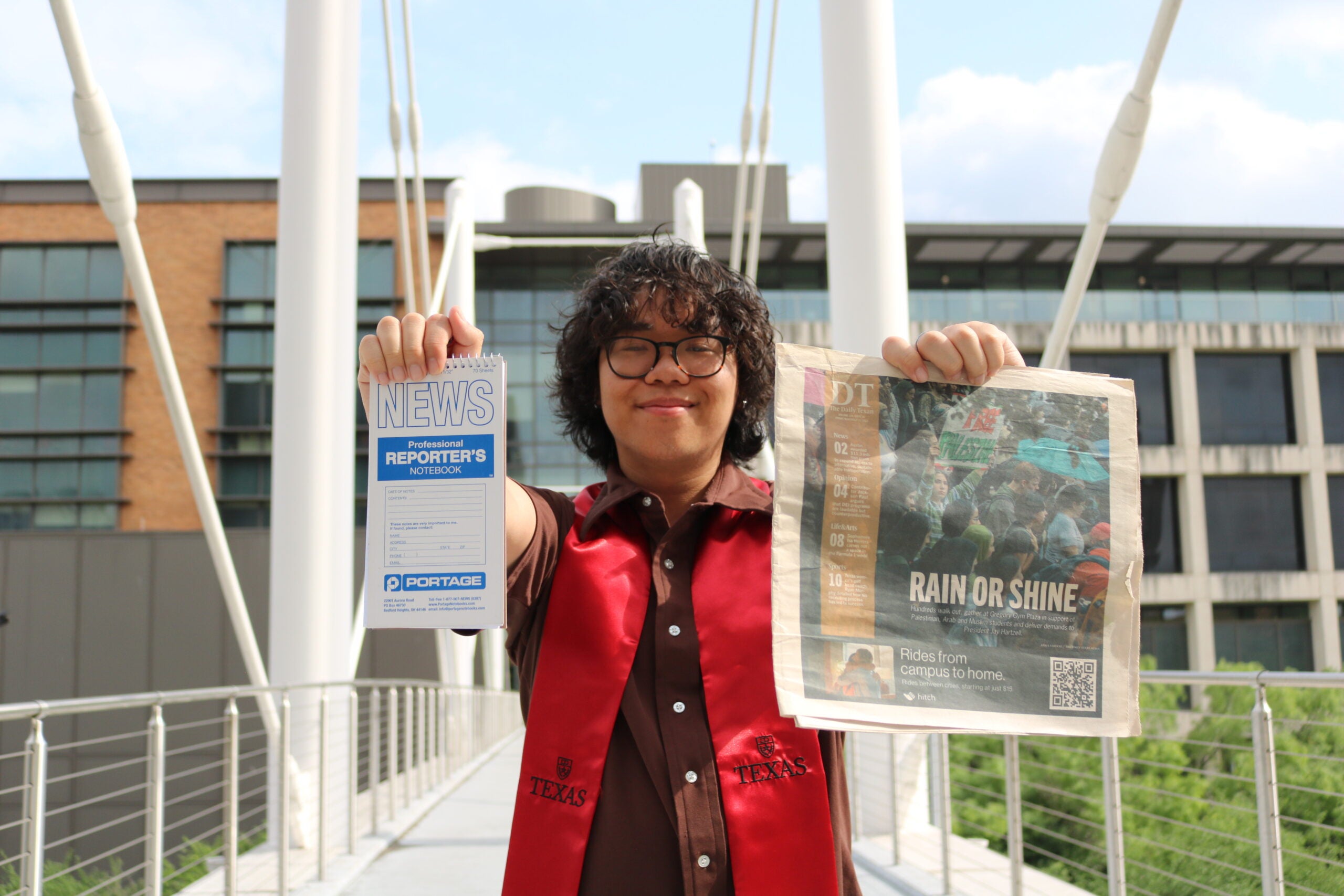
Kevin Vu at the Moody College of Communication in 2024, taking his graduation photo. He
previously worked at Community Impact, the Fort Worth Report and The Texas Tribune.
How I Coped
At first, you receive messages from your network about the news: that they will always be a shoulder to lean on, and a reference for you. I spent that first week talking to mentors, colleagues and folks I knew who were previously laid off, just to feel better about my situation. But after that first week of sympathies, life goes on. News never stops. People will continue to go about their days, while you’re left to find the next step.
There’s this false sense of security you get after you land a role. You spent months job searching and you found a newsroom that took a chance on you. You want to focus on your job and the amazing work you’re doing. But I advise you to stay ready. Update your portfolio, freshen up your resume, and back up the stories you’re doing right now. You never know when you might be on the chopping block, and whether your stories will still be on the website after you leave.
Although I eventually landed a new position a month after being laid off, it was a humbling experience. I applied to dozens of reporting positions across the country, getting to multiple rounds of interviews only to be either ghosted or ultimately rejected. I felt imposter syndrome and questioned whether I was fit to be a journalist.
I wasn’t alone in those feelings. I spoke with laid-off colleagues and read Substacks from folks navigating similar circumstances, and I realized that what I was feeling was common. In some ways, knowing that I wasn’t the only one in this venture spurred me. Knowing that there were other people who have been laid off in the past who were able to bounce back gave me the motivation I needed.
I also tried to maintain healthy habits outside of job searching, from exercising to hanging with friends to cooking. I needed that sense of normalcy despite being unsure about the future. If I didn’t take the time to do these activities or give myself that freedom, I’d instead be constantly thinking about jobs.
Words from Texas Journalists
I sat down with three Texas journalists who were laid off in the past to understand what was going through their minds, how they bounced back and what advice they have for journalists who are going through or are nervous about layoffs.
Hillary Ma was an audience engagement producer for the Houston Landing before the newsroom shut down in May 2025. When it was announced in April that the newsroom was shuttering in a month, she tried to avoid the thought that she would be out of a job and instead focused her last month on projects she was passionate about. Looking back, however, she said she wished she had processed her emotions instead of suppressing them to allow herself to feel sorrow over the situation.
“Knowing how to take care of yourself is key to getting through these difficult times,” Ma said. “Being in tune with your emotions; letting yourself feel the way you are. Your spark will come back. You just need to trust the process.”
Todd Wiseman was the senior editor for video and multimedia at The Texas Tribune from 2010 until he was laid off in 2023 — the first in the nonprofit newsroom’s history. Wiseman said the transition was difficult, especially since the last time he touched his resume was over a decade ago. Despite our vast difference in experience, he described feeling the same way as I had.
Wiseman had a false sense of security there, he said, calling his layoff after so many years a “pretty big punch in the gut.” And that meant he was unprepared for a sudden job hunt. His resume was “so dusty, it was worthless,” he said. “I had never used LinkedIn; I had a ghost profile. That was a mistake — I felt so comfortable there that I didn’t really have any of that stuff prepared.”
Wiseman said he relied on his support group, which included his wife, parents, co-workers and his professional network. Through using on his network to meet and catch up, he found more success being interviewed compared to randomly applying to jobs.
“It is worth reaching out to people, even if you don’t want to bother them, or if it’s not your personality to impose or ask for help,” Wiseman said. “I think people do want to help. Almost every time I’ve gotten anywhere, it’s been through knowing somebody.”
Adriana Rezal has been laid off twice in her journalism career — first from the San Francisco Chronicle in 2023, and then the Houston Landing in 2025 as a data reporter. Being laid off twice made her question whether she belongs in journalism, she said, equating two layoffs to the feeling that the industry is trying to kick her out.
“You never think it’s going to happen to you,” Rezal said. “You hear about copy desk teams or people who work in the printing presses. It sucks when it’s you. It feels like, ‘Man, should I still be here? Should I still be doing this?’”
Ma and Rezal talked about the idea of pivoting to different careers. While it might seem daunting, both said people should be open to switching careers if that’s what’s best for them.
“I hope people can forgive themselves if they ever feel guilty for leaving the journalism industry,” Ma said. “It’s a tough time to be a journalist, but at the end of the day everyone has bills to pay and I hope they find happiness with putting themselves first above anything else.”
You will be OK
Whether you just got laid off or you’re worried about the idea of it, you will be okay. Rely on your network, appreciate the work you’ve done and take a few days for yourself. Cry if you need to. Do what’s best for you. You will blame yourself but recognize that layoffs are almost never your fault — instead, remember that they are what the company thinks is “best” operationally and financially. It may feel like the world is crumbling around you, but you will bounce back and find yourself again.
Ma is now an audience journalist with The Dallas Morning News. Wiseman is a freelance video producer and editor and teaches a documentary course at the Austin School of Film. Rezal is now a data reporter with the Houston Chronicle. This is only the first chapter in your story; it does not mark the end. Whether the path leads you back into journalism, or to a completely different field, a layoff is not the end of the world. Don’t define this one moment as the breaking point. We all have our second and third acts — it just takes time and resilience to see it through.